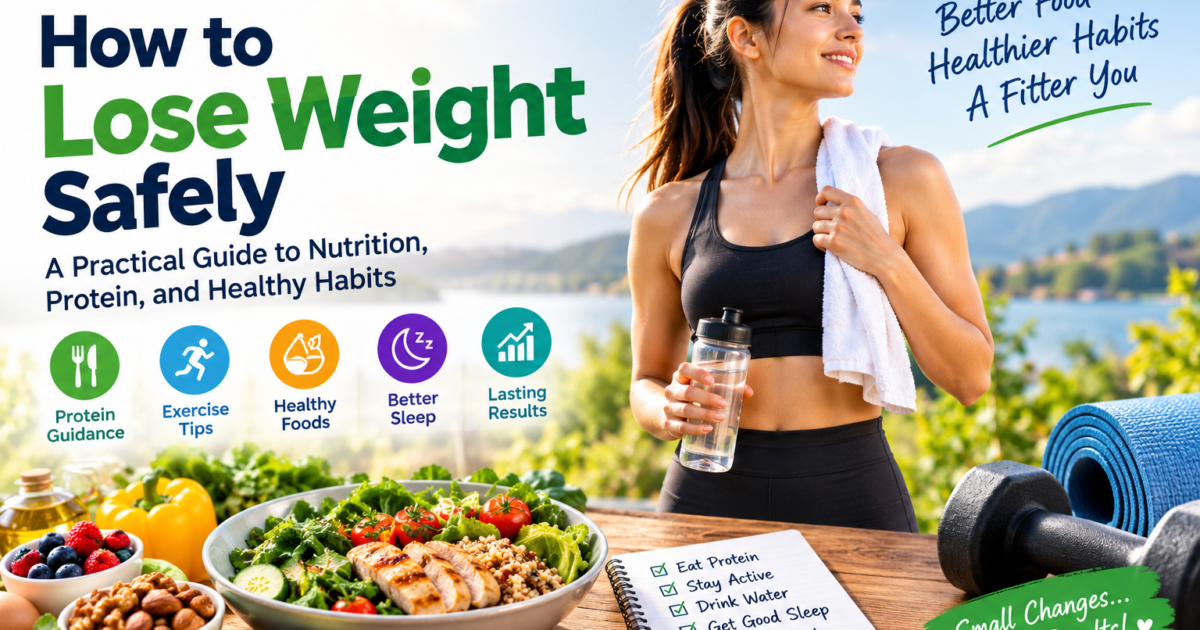
How to Lose Weight Safely: A Practical Guide to Nutrition, Protein, and Healthy Habits
Losing weight is not just about eating less or exercising more. It is about developing healthy habits that help you reduce excess body fat while maintaining muscle, energy, and overall well-being.
Many people start a weight-loss journey with strict diets, skipped meals, or unrealistic expectations. These approaches can be difficult to maintain. A more effective strategy combines balanced nutrition, appropriate portions, regular physical activity, sufficient sleep, and consistency.
In this guide, you will learn how weight loss works, how protein supports your goals, which foods to choose, and how to create a practical routine you can follow in everyday life.
1. Understand How Weight Loss Works
Weight loss generally occurs when your body uses more energy than you consume over time. This is called a calorie deficit.
Your body needs energy to perform essential functions, digest food, move, and exercise. When your energy intake remains below your energy expenditure, your body draws on stored energy, including body fat.
However, eating as little as possible is not the goal. An overly restrictive diet can make it harder to meet your nutritional needs, maintain muscle, and sustain your progress.
A sensible approach is to make moderate, manageable changes that you can maintain over the long term.
The U.S. Centers for Disease Control and Prevention explains that gradual weight loss is generally more likely to be maintained than rapid weight loss. Individual results vary depending on health, starting weight, medications, and other factors.
2. Eat Enough Protein While Losing Weight
Protein is an important part of a weight-loss diet. It supports muscle maintenance, tissue repair, and many other functions in the body.
Getting enough protein may also help you feel satisfied after meals, making it easier to follow a calorie-controlled eating plan.
Good sources of protein include:
- Eggs
- Chicken and other lean meats
- Fish
- Milk and plain yogurt
- Lentils and chickpeas
- Beans and peas
- Tofu and other soy foods
- Nuts and seeds
How much protein do you need?
Protein requirements depend on your body weight, activity level, health, and fitness goals.
For generally healthy adults who are trying to lose weight, an intake around 1.2–1.6 grams of protein per kilogram of body weight per day can be a useful starting reference. People who perform regular resistance training may have different requirements.
For example, a person weighing 70 kg would get the following daily amount at that intake:
- Lower end: 70 × 1.2 = 84 grams
- Upper end: 70 × 1.6 = 112 grams
This is an illustrative range, not a personalized prescription. People with kidney disease or other medical conditions may need individualized protein advice.
Helpful tool: Use the ProteinCalculator.io Protein Calculator to estimate your daily protein needs based on your body weight and activity level.
3. Choose Foods That Keep You Satisfied
A successful weight-loss diet should provide enough nutrients while helping you manage your total calorie intake.
Instead of eliminating entire food groups, build meals around a variety of nutritious foods.
Vegetables
Vegetables provide fiber, vitamins, minerals, and volume. Adding vegetables to lunch and dinner can help make meals more filling without adding many calories.
Examples include spinach, carrots, cucumber, tomatoes, cauliflower, cabbage, and leafy greens.
Whole fruits
Choose whole fruits regularly rather than relying mainly on fruit juices. Whole fruit generally provides fiber and takes longer to consume than juice.
Apples, oranges, guavas, berries, and bananas can all fit into a balanced diet.
Protein-rich foods
Include eggs, fish, chicken, lentils, beans, yogurt, or other suitable protein sources in your meals.
Whole grains and other carbohydrates
Oats, whole-wheat roti, whole-grain bread, and other minimally processed grains can provide energy and fiber.
Rice and potatoes can also fit into a weight-loss diet. Portion sizes and the overall balance of your meals matter more than automatically banning a particular food.
Healthy fats
Nuts, seeds, and suitable vegetable oils provide essential nutrients. Because fats are calorie-dense, portion awareness is useful when managing calorie intake.
4. Pay Attention to Portion Sizes
Even nutritious foods contribute calories. Portion awareness can therefore help you achieve a calorie deficit without following an unnecessarily restrictive diet.
Try these practical strategies:
- Serve food on a plate instead of eating directly from large packets.
- Include a protein source and vegetables in your main meals.
- Measure cooking oil occasionally to understand how much you use.
- Eat slowly and pay attention to hunger and fullness.
- Reduce frequent high-calorie snacks if they are preventing progress.
- Save leftovers when you are comfortably full.
You do not need to weigh every ingredient forever. Tracking portions for a short period can help you understand your usual eating habits and identify useful changes.
5. Follow a Simple Daily Eating Routine
A practical eating routine is often easier to maintain than a complicated diet plan.
Here is an example of how a balanced day might look.
Breakfast
Eggs with whole-wheat roti and vegetables, or plain yogurt with oats and fruit.
Lunch
Chicken, fish, lentils, or beans with vegetables and a suitable portion of rice or roti.
Afternoon snack
Fruit, plain yogurt, or a modest portion of nuts.
Dinner
A protein-rich food such as chicken, fish, beans, or lentils, served with vegetables and a suitable portion of carbohydrates.
These are examples rather than fixed meal prescriptions. Your portions and total food intake should reflect your individual energy needs, preferences, budget, and activity level.
You can adjust the timing and number of meals to suit your routine. Eating more frequently does not automatically produce greater weight loss.
6. Exercise to Support Fat Loss and Muscle Maintenance
Physical activity supports health, helps increase energy expenditure, and can make it easier to maintain weight loss.
You do not need an expensive gym membership to begin.
Useful activities include:
- Brisk walking
- Cycling
- Swimming
- Dancing
- Home workouts
- Resistance exercises using weights or resistance bands
For most adults, public-health guidelines recommend working toward at least 150 minutes of moderate-intensity aerobic activity each week, together with muscle-strengthening activity on two or more days.
Start at a level you can manage safely and gradually increase your activity. If you have a chronic health condition or have been inactive for a long time, seek appropriate medical advice before starting a demanding exercise program.
Why strength training matters
When losing weight, your goal may be to reduce body fat while retaining as much muscle as possible.
Resistance training, combined with adequate protein and appropriate energy intake, can help support muscle retention. Walking and other aerobic activities are also valuable, so you can combine both types of exercise.
7. Get Enough Sleep and Manage Stress
Nutrition and exercise are important, but healthy weight management also involves sleep and stress.
Insufficient sleep can affect appetite, food choices, energy, and motivation. Stress can also influence eating patterns and make healthy routines harder to maintain.
Try to:
- Maintain a consistent sleep schedule.
- Create a relaxing bedtime routine.
- Limit late-night screen use if it interferes with sleep.
- Take short breaks during stressful days.
- Choose enjoyable activities that help you relax.
Most adults should aim for at least seven hours of sleep per night, although individual needs vary.
8. Track Your Progress Without Becoming Obsessed
Body weight naturally fluctuates because of hydration, digestion, salt intake, hormonal changes, and other factors. A change on the scale does not always represent a change in body fat.
Consider these ways to monitor progress:
- Weigh yourself under similar conditions when appropriate.
- Review trends over several weeks rather than focusing on one measurement.
- Track waist measurements periodically if useful.
- Notice improvements in fitness, energy, and daily habits.
- Record your exercise and eating routines.
If progress slows, review your portions, activity, sleep, and consistency before making major changes.
Weight-loss plateaus are common. Your energy needs may decrease as your body weight changes, and normal fluctuations can temporarily hide progress.
9. Common Weight-Loss Mistakes to Avoid
Skipping meals to compensate for overeating
Missing meals is not automatically harmful for everyone, but using meal skipping as punishment can lead to excessive hunger and an unsustainable eating pattern. Return to your normal balanced routine instead.
Following extremely low-calorie diets without supervision
Severely restricting food can make it difficult to obtain sufficient protein, vitamins, minerals, and other nutrients. Very-low-calorie diets should only be undertaken with appropriate professional supervision.
Eliminating all carbohydrates
Carbohydrates are not inherently responsible for weight gain. Overall energy intake, food quality, portions, and consistency all matter.
Expecting rapid results
Large short-term changes on the scale can include water loss rather than fat loss. Sustainable progress is generally more useful than chasing rapid changes.
Relying on supplements or fat-burning products
Supplements are not substitutes for a balanced diet, physical activity, and healthy habits. Be cautious about products promising effortless or dramatic weight loss.
Giving up after one difficult day
One meal or one missed workout does not determine your long-term outcome. Consistency over time matters more than perfection.
10. Create a Simple Seven-Day Starting Plan
You do not need to change everything on the first day. Start with a few realistic habits.
Day 1: Record your current eating habits and establish a realistic goal.
Day 2: Add a protein-rich food to your main meals.
Day 3: Include vegetables with lunch and dinner.
Day 4: Take a comfortable walk and gradually increase your activity as appropriate.
Day 5: Review snack portions and reduce sugary drinks if you consume them frequently.
Day 6: Plan a few balanced meals for the coming week.
Day 7: Review your progress and choose the habits you can continue.
Repeat the routine and make adjustments based on your needs. Seven days is a starting point, not a deadline for achieving a particular weight.
Frequently Asked Questions
What is the best way to lose weight safely?
A sustainable approach combines an appropriate calorie deficit, balanced nutrition, regular physical activity, sufficient sleep, and habits you can maintain. Your ideal plan depends on your health and individual circumstances.
Does eating more protein help with weight loss?
Adequate protein can help support fullness and muscle maintenance during weight loss. However, protein alone does not guarantee fat loss. Total energy intake and overall dietary quality remain important.
Can I lose weight without going to the gym?
Yes. You can begin with walking, home-based activities, and manageable dietary changes. Strength exercises can also be performed at home using body weight or resistance bands.
Should I stop eating rice or roti to lose weight?
No. Rice and roti can fit into a balanced weight-loss diet. Choose portions that suit your energy needs and combine them with protein-rich foods and vegetables.
How often should I eat?
There is no single meal frequency that works best for everyone. Choose a routine that helps you manage hunger, meet your nutritional needs, and maintain consistent eating habits.
How much protein should I eat while losing weight?
Protein needs vary. A range around 1.2–1.6 g/kg/day is a useful reference for many generally healthy adults pursuing weight loss, while physically active people may need different amounts. A healthcare professional can help individualize the target when necessary.
Why has my weight-loss progress stopped?
Possible reasons include changes in energy needs, portion sizes, physical activity, hydration, and normal weight fluctuations. Review your habits over time instead of reacting to a single weigh-in.
Final Thoughts
Healthy weight loss is not about finding a perfect diet or following strict rules. It is about developing a balanced approach that fits your life.
Prioritize nutritious foods, eat enough protein, manage portions, stay physically active, sleep well, and allow yourself time to make progress. Small habits that you can maintain are often more useful than short-term plans that leave you exhausted or hungry.
For a personalized starting estimate, visit the ProteinCalculator.io Protein Calculator.
Medical disclaimer: This article is for general educational purposes and does not replace individualized medical or nutritional advice. If you are pregnant, breastfeeding, under 18, have a history of an eating disorder, have kidney disease or another medical condition, or take medication that affects weight or appetite, consult a qualified healthcare professional before making substantial dietary changes.
References
- Centers for Disease Control and Prevention. Steps for Losing Weight.
- National Institute of Diabetes and Digestive and Kidney Diseases. Eating and Physical Activity to Lose or Maintain Weight.
- International Society of Sports Nutrition. Position Stand: Protein and Exercise.