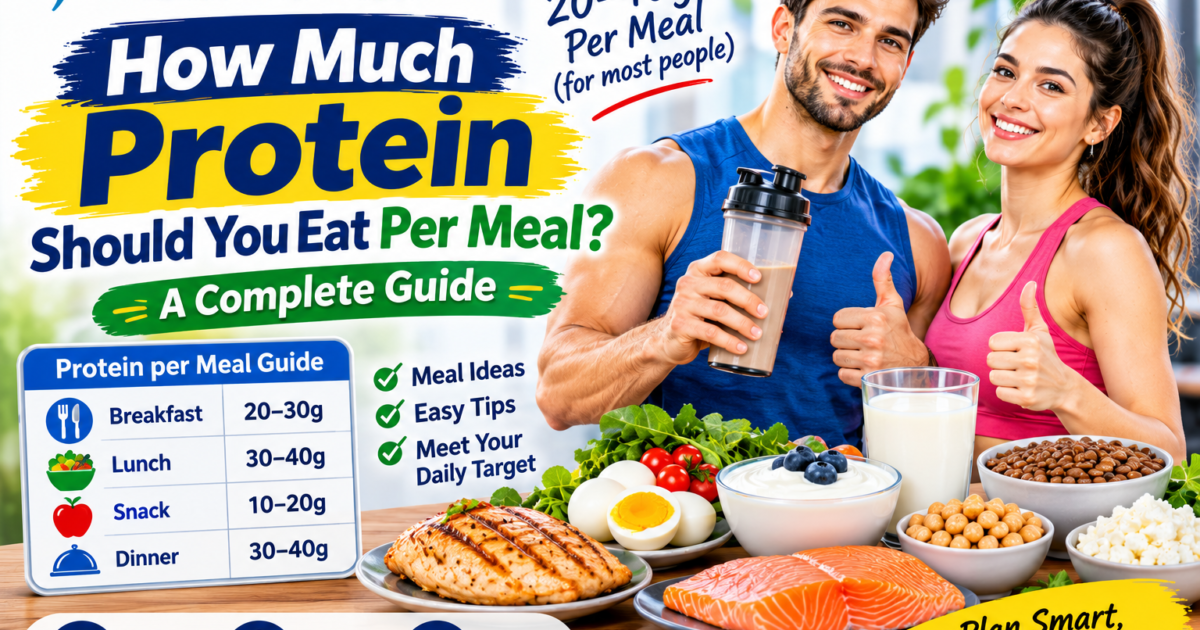
How Much Protein Should You Eat Per Meal? A Complete Guide
Protein is one of the most important nutrients for your body. It supports muscle growth, tissue repair, recovery, and many essential body functions. But knowing how much protein you need each day is only part of the picture.
Many people also wonder: How much protein should you eat per meal?
Should you eat 20 grams, 30 grams, or 50 grams at once? Does eating more protein in one meal help build more muscle? And how should you divide your daily protein intake between breakfast, lunch, and dinner?
In this guide, you’ll learn how to distribute protein throughout the day, understand practical serving sizes, and build balanced high-protein meals.
Quick Answer: How Much Protein Per Meal?
For many adults, eating approximately 20–40 grams of protein per meal is a practical starting point. However, your ideal amount depends on your body weight, age, activity level, fitness goals, and total daily protein needs.
People with higher protein requirements may need larger servings or additional protein-rich snacks.
The most important thing is to meet your overall daily protein target while spreading your intake across meals that fit your routine.
Why Is Protein Distribution Important?
Your body uses protein to build and repair tissues, produce enzymes and hormones, and maintain muscle.
Eating protein throughout the day can help you:
- Support muscle growth and maintenance.
- Provide your body with amino acids at regular intervals.
- Support recovery after exercise.
- Make meals more satisfying.
- Meet your daily protein needs more consistently.
You do not need to eat protein at exactly the same time every day. Consistency and total daily intake matter most.
How Much Protein Should You Eat at Each Meal?
Your protein target should be based on your daily needs. Once you know that number, you can divide it between your meals.
Here is a simple example:
| Daily Protein Target | 3 Meals Per Day | 4 Meals Per Day |
|---|---|---|
| 60 grams | 20 g each | 15 g each |
| 90 grams | 30 g each | 22–23 g each |
| 120 grams | 40 g each | 30 g each |
| 150 grams | 50 g each | 37–38 g each |
| 180 grams | 60 g each | 45 g each |
These are examples of how to distribute protein, not strict limits. Your meals do not have to contain exactly equal amounts.
Protein Per Meal for Different Fitness Goals
Your daily protein needs may change depending on your goals.
1. For General Health
If you are generally healthy and not following an intense training routine, focus on meeting your daily protein requirement.
The recommended dietary allowance for most healthy adults is approximately 0.8 grams of protein per kilogram of body weight per day.
For example, a person weighing 70 kg would need approximately 56 grams daily as a basic reference.
2. For Muscle Building
People who regularly perform resistance training may benefit from higher daily protein intake.
A commonly used range for exercising adults is approximately 1.4–2.0 grams per kilogram of body weight per day.
For example, someone weighing 70 kg might aim for approximately 98–140 grams daily, depending on training and individual needs.
Dividing this amount across three to five meals can make it easier to reach the target.
3. For Weight Loss
During weight loss, getting enough protein can help support muscle maintenance, especially when combined with resistance training.
Include a protein source in each main meal, such as eggs, chicken, fish, Greek yogurt, beans, or tofu.
Your exact target depends on your body weight, activity level, health status, and calorie intake.
Best High-Protein Foods for Every Meal
You do not need expensive supplements to meet your protein needs. Many everyday foods provide useful amounts of protein.
| Food | Approximate Protein |
|---|---|
| 100 g cooked chicken breast | 31 g |
| 100 g cooked fish | 20–25 g |
| 2 large eggs | 12–13 g |
| 250 ml milk | 8 g |
| 100 g Greek yogurt | 9–10 g |
| 100 g cooked lentils | 9 g |
| 100 g cooked chickpeas | 9 g |
| 100 g firm tofu | 10–15 g |
Values are approximate and vary by food variety, brand, preparation, and serving size.
Example: A High-Protein Daily Meal Plan
Here is an example of how someone could distribute approximately 120 grams of protein across a day.
Breakfast — Approximately 30 g
- 2 large eggs.
- 250 ml milk.
- 1 serving of Greek yogurt.
Lunch — Approximately 35 g
- 100 g cooked chicken breast.
- Rice or whole-grain bread.
- Vegetables or salad.
Afternoon Snack — Approximately 20 g
- Greek yogurt or another suitable high-protein snack.
- A small serving of nuts if desired.
Dinner — Approximately 35 g
- Fish, chicken, tofu, or another protein-rich food.
- Vegetables.
- Potatoes, rice, or whole grains.
Daily total: Approximately 120 grams of protein.
Actual amounts depend on portion sizes and the products you use. You can adjust the meal plan to suit your preferences and daily target.
Does Eating More Than 40 Grams of Protein in One Meal Go to Waste?
No. This is a common misunderstanding.
Your body does not simply throw away protein because you eat more than 30 or 40 grams in one sitting. Protein is digested and its amino acids can be used for many different functions throughout the body.
However, eating extremely large amounts in one meal is not necessarily better for muscle growth than distributing your daily protein across several meals.
A balanced approach is to meet your daily protein needs and spread your intake reasonably throughout the day.
Is It Better to Eat Protein Before or After a Workout?
Both pre-workout and post-workout meals can contribute to your daily protein intake.
Eating a protein-containing meal before exercise can provide amino acids during and after training. Eating protein after exercise supports recovery and muscle protein synthesis.
You do not need to rush to drink a protein shake immediately after your workout.
Instead, focus on eating enough protein throughout the day and having a convenient protein-rich meal within a reasonable period around your training session.
5 Common Protein Distribution Mistakes
Avoid these common mistakes when planning your meals:
- Eating almost all your protein at dinner: Try to include protein in breakfast and lunch too.
- Ignoring total daily intake: Meal distribution cannot replace meeting your overall protein needs.
- Depending only on supplements: Whole foods can provide protein along with other important nutrients.
- Following someone else’s protein target: Your needs depend on your body weight, activity, and goals.
- Expecting instant results: Muscle growth and body composition changes require consistent nutrition and training over time.
Frequently Asked Questions
1. Is 30 grams of protein per meal enough?
For many adults, 30 grams is a useful amount per meal. However, whether it is enough depends on your daily protein target and how many meals you eat.
2. Can I eat 50 grams of protein in one meal?
Yes. Your body can digest and use more than 40 or 50 grams of protein in a meal. There is no universal absorption limit of 30 grams.
3. How many times should I eat protein per day?
Many people find it practical to include protein in three to five meals or snacks. Choose a schedule that helps you meet your daily target.
4. Should I eat protein at breakfast?
Yes. Including eggs, milk, yogurt, cottage cheese, or other protein-rich foods at breakfast can help you distribute your daily intake more evenly.
5. Is protein important on rest days?
Yes. Your body continues repairing and maintaining muscle on rest days, so keep meeting your daily protein needs even when you are not exercising.
6. Can I get enough protein without protein powder?
Absolutely. Foods such as eggs, chicken, fish, milk, yogurt, lentils, beans, chickpeas, and tofu can help you meet your protein needs.
Calculate Your Daily Protein Needs
Now that you understand how much protein to eat per meal, the next step is finding your personal daily protein target.
Use our Protein Calculator to estimate how much protein you need based on your body weight, activity level, and fitness goals.
Once you know your daily target, divide it across breakfast, lunch, dinner, and snacks to create a practical eating routine.
Try our Protein Calculator: https://proteincalculator.io/
Final Thoughts
The ideal amount of protein per meal is different for everyone. For many adults, approximately 20–40 grams per meal is a practical starting point, but your daily protein needs should guide your portions.
Focus on eating enough total protein, choosing a variety of nutritious foods, and spreading your intake throughout the day.
You do not need a perfect meal schedule. A consistent, balanced approach is what matters most.
Disclaimer: This article is for general educational purposes and is not a substitute for personalized medical or nutrition advice. People with kidney disease or other medical conditions affecting protein intake should consult a qualified healthcare professional.
References
- National Academies of Sciences, Engineering, and Medicine. Dietary Reference Intakes for protein and amino acids.
- Jäger R, et al. International Society of Sports Nutrition Position Stand: Protein and Exercise. Journal of the International Society of Sports Nutrition, 2017.
- Morton RW, et al. A systematic review, meta-analysis and meta-regression of the effect of protein supplementation on resistance training-induced gains. British Journal of Sports Medicine, 2018.