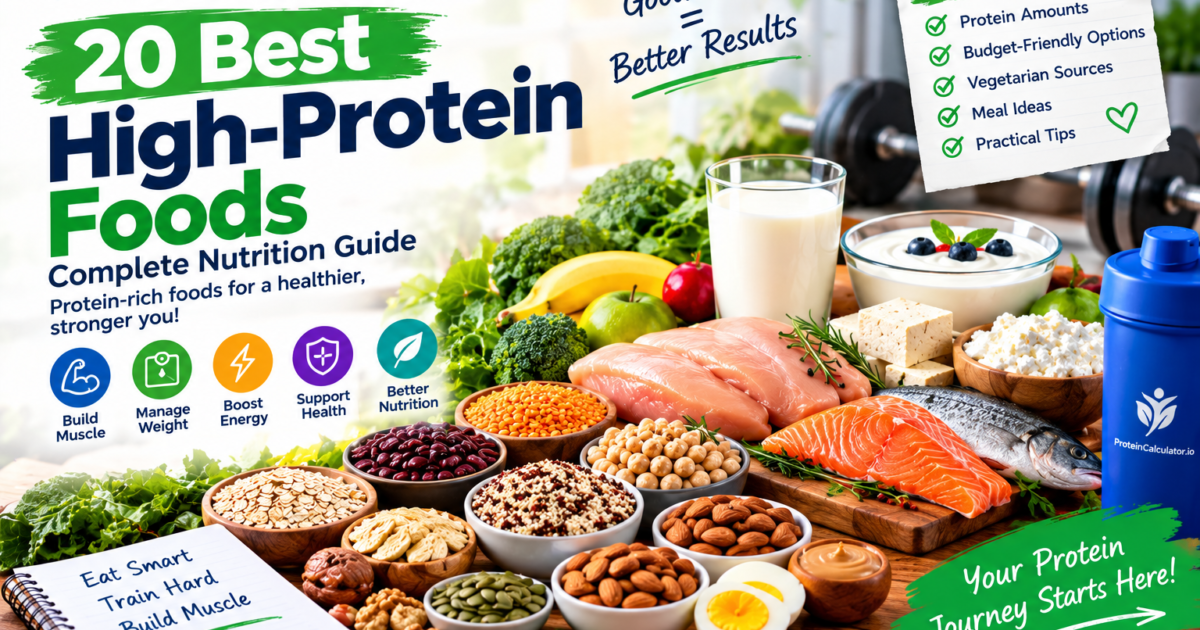
20 Best High-Protein Foods to Add to Your Daily Diet
Protein is one of the most important nutrients for building muscle, maintaining strength, supporting normal body functions, and recovering after exercise. Whether your goal is to gain muscle, lose weight, or simply eat healthier, choosing the right protein-rich foods can make your daily nutrition easier.
The good news? You do not need expensive supplements or a complicated diet to get enough protein. Everyday foods such as eggs, chicken, milk, yogurt, lentils, chickpeas, and beans can help you meet your nutritional needs.
In this guide, you will discover 20 excellent high-protein foods, their approximate protein content, budget-friendly options, vegetarian alternatives, and practical ways to include more protein in your meals.
Why Is Protein Important?
Protein is made up of amino acids that your body uses to build and repair tissues. It also plays important roles in producing enzymes, hormones, and other substances needed for normal health.
Getting enough protein can help you:
- Build and maintain muscle: Protein supports muscle repair and growth, particularly when combined with resistance training.
- Support recovery: Your body uses amino acids to repair tissues after exercise and everyday physical activity.
- Maintain strength: Adequate protein helps support muscle maintenance as you age.
- Feel satisfied after meals: Protein-rich foods can help you feel fuller, although the effect depends on the overall meal and individual needs.
- Meet your nutritional needs: Many protein foods also provide important nutrients such as iron, calcium, zinc, and vitamin B12.
Protein is important, but it is not the only nutrient your body needs. A balanced diet should also include vegetables, fruits, whole grains, healthy fats, and adequate fluids.
20 Best High-Protein Foods
The following table provides approximate protein amounts for common foods. Values vary by variety, brand, cooking method, and serving size.
| Food | Typical serving | Approx. protein |
|---|---|---|
| Chicken breast, cooked | 100 g | 30–31 g |
| Tuna, cooked or canned | 100 g | 24–26 g |
| Lean beef, cooked | 100 g | 25–27 g |
| Fish, cooked | 100 g | 20–26 g |
| Eggs | 2 large eggs | 12–13 g |
| Plain Greek yogurt | 170 g | 15–18 g |
| Cottage cheese | 100 g | 11–13 g |
| Milk | 250 ml | 8–9 g |
| Plain yogurt | 200 g | 7–10 g |
| Firm tofu | 100 g | 10–15 g |
| Lentils, cooked | 1 cup | 17–18 g |
| Chickpeas, cooked | 1 cup | 14–15 g |
| Kidney beans, cooked | 1 cup | 13–15 g |
| Soybeans, cooked | 1 cup | 25–29 g |
| Peanuts | 30 g | 7–8 g |
| Almonds | 30 g | 6 g |
| Pumpkin seeds | 30 g | 8–9 g |
| Oats, dry | 40 g | 5–7 g |
| Quinoa, cooked | 1 cup | 8 g |
| Peanut butter | 2 tablespoons | 7–8 g |
Important: Meat and fish values refer to cooked portions, while lentils, beans, chickpeas, and quinoa are measured after cooking. Oats, nuts, and seeds are measured before cooking. These figures are estimates, not laboratory measurements of your specific food.
1. Chicken Breast
Chicken breast is one of the most convenient high-protein foods for people who want to build muscle or maintain a balanced diet.
A 100-gram cooked portion typically provides around 30–31 grams of protein. Skinless chicken is generally a lean option, especially when grilled, baked, or cooked with a moderate amount of oil.
How to eat it:
- Serve grilled chicken with roti and vegetables.
- Add shredded chicken to a salad or sandwich.
- Prepare chicken with rice for a filling post-workout meal.
You do not need to eat chicken at every meal. Varying your protein sources helps you obtain a wider range of nutrients.
2. Eggs
Eggs are affordable, convenient, and versatile. Two large eggs provide approximately 12–13 grams of protein, along with vitamins, minerals, and other nutrients.
Eggs contain all nine essential amino acids, making them a complete protein source.
How to eat them:
- Boil eggs for a quick breakfast.
- Prepare an omelet with tomatoes, onions, and other vegetables.
- Serve eggs with whole-wheat roti or whole-grain bread.
Eggs can fit into many healthy eating patterns. Your overall diet, preparation method, and individual health needs matter more than relying on one food alone.
3. Fish
Fish provides high-quality protein, and oily varieties such as salmon, sardines, and mackerel can also supply omega-3 fatty acids.
Depending on the species, 100 grams of cooked fish commonly provides around 20–26 grams of protein.
Easy meal ideas:
- Grilled fish with vegetables.
- Fish with rice and salad.
- Baked fish seasoned with lemon, garlic, and herbs.
Choose a variety of fish when possible and follow local food-safety guidance, particularly for pregnant people and young children.
4. Milk and Yogurt
Milk and yogurt offer protein as well as calcium. They can be useful options for breakfast, snacks, or meals.
A 250 ml glass of milk usually contains around 8–9 grams of protein. A 200-gram serving of plain yogurt may provide approximately 7–10 grams, depending on how it is made.
Greek yogurt is often higher in protein because it is strained.
Practical tip: Choose plain yogurt or milk with little or no added sugar. If you are lactose intolerant, lactose-free dairy products or suitable fortified alternatives may be helpful. Check plant-based drink labels because their protein content varies considerably.
5. Lentils (Daal)
Lentils are among the most practical protein sources for budget-conscious households. They also provide fiber, folate, iron, and other nutrients.
One cup of cooked lentils contains approximately 17–18 grams of protein.
How to include daal in your diet:
- Eat daal with roti or rice.
- Prepare lentil soup with vegetables.
- Combine different lentils to add variety to your weekly meals.
Daal is particularly useful because it is widely available and can be prepared in many different ways.
6. Chickpeas (Chana)
Chickpeas are a nutritious source of plant protein, carbohydrates, fiber, and minerals. One cup of cooked chickpeas provides around 14–15 grams of protein.
Try boiled chana as a snack, add chickpeas to salads, or prepare a chickpea curry with vegetables.
If you use canned chickpeas, draining and rinsing them can help reduce some of the added sodium.
7. Beans
Kidney beans and other varieties of beans provide protein, fiber, and complex carbohydrates.
One cup of cooked kidney beans contains approximately 13–15 grams of protein.
Beans can be added to soups, curries, rice dishes, and salads. They are especially useful for people who prefer plant-based meals.
Dried beans should be prepared safely according to the variety. For example, dried kidney beans need thorough boiling; slow cookers alone may not reach the temperatures needed to make them safe.
8. Soybeans and Tofu
Soybeans are a particularly useful plant protein because they provide all nine essential amino acids.
Cooked soybeans can provide roughly 25–29 grams of protein per cup, while firm tofu often provides around 10–15 grams per 100 grams, depending on the product.
Try tofu in stir-fries, curries, or vegetable dishes. Cooked soybeans can also be added to salads and other meals.
Soy foods offer a useful alternative for vegetarians and people who want to reduce their reliance on meat.
9. Lean Beef
Lean beef provides protein, iron, zinc, and vitamin B12. A 100-gram cooked portion often contains around 25–27 grams of protein, depending on the cut.
Choose leaner cuts more often, trim visible fat, and use grilling, baking, or moderate-oil cooking methods.
For overall health, vary your protein sources and limit processed meats rather than relying on red meat for most of your daily protein.
10. Cottage Cheese
Cottage cheese is a protein-rich dairy food that can be convenient for breakfast or snacks. A 100-gram portion commonly provides around 11–13 grams of protein.
Eat it with fruit, add it to a savory meal, or use it in recipes that suit your dietary preferences.
Check the nutrition label because protein, fat, and sodium levels differ among products.
11. Peanuts and Peanut Butter
Peanuts provide protein, healthy unsaturated fats, and other nutrients. A 30-gram serving supplies approximately 7–8 grams of protein.
Peanut butter can be spread on whole-grain bread, mixed into oats, or added to a smoothie.
However, peanuts and peanut butter are calorie-dense. They are nutritious foods, but large portions can add substantial calories when weight management is your goal.
Choose products with minimal added sugar and salt when possible, and avoid peanuts if you have a peanut allergy.
12. Almonds
Almonds contain protein, fiber, vitamin E, and unsaturated fats. A 30-gram serving provides around 6 grams of protein.
Use a small handful as a snack, add chopped almonds to oats, or sprinkle them over yogurt.
Almonds are a useful addition to your diet, but they are not as protein-dense as chicken, fish, or many soy products.
13. Pumpkin Seeds
Pumpkin seeds are a convenient source of plant protein, magnesium, and other minerals.
A 30-gram serving generally provides around 8–9 grams of protein.
Sprinkle them over yogurt or salads, add them to oats, or eat a small portion as a snack. Unsalted varieties can help you keep sodium intake in check.
14. Oats
Oats contain more protein than many people expect, along with fiber that supports digestive health.
A 40-gram serving of dry oats usually contains around 5–7 grams of protein.
Prepare oats with milk instead of water, then add yogurt, seeds, or nuts to increase the meal’s protein content.
Oats are not a complete replacement for concentrated protein sources, but they can contribute meaningfully to your daily total.
15. Quinoa
Quinoa is a grain-like seed that supplies carbohydrates, fiber, and protein. One cup of cooked quinoa contains approximately 8 grams of protein.
Use it as an alternative to rice, add it to salads, or serve it alongside beans and vegetables.
Quinoa contains all nine essential amino acids, although the total protein in a typical serving is lower than that in many meat or soy servings.
16. Tuna
Tuna is a convenient protein-rich food, particularly when canned. Depending on the product and preparation, 100 grams may contain around 24–26 grams of protein.
Add tuna to sandwiches, salads, or rice dishes.
Choose products that suit your dietary needs and pay attention to sodium levels. Tuna species differ in mercury content, so vary your seafood choices and follow local guidance on consumption, particularly during pregnancy.
17. Greek Yogurt
Greek yogurt is made by straining yogurt, which concentrates its protein compared with many regular yogurts.
A 170-gram serving may provide approximately 15–18 grams of protein, although brands vary.
Choose plain Greek yogurt and add fruit, oats, or a small portion of nuts for a balanced snack.
If Greek yogurt is expensive or difficult to find, ordinary plain yogurt and other affordable protein foods can still help you meet your daily target.
18. Cottage Cheese Alternatives for Local Diets
If cottage cheese is not readily available in your area, you can use other familiar protein foods, such as plain yogurt, milk, eggs, daal, or chickpeas.
Paneer can also provide protein, although its fat and calorie content varies with the recipe and milk used.
Compare nutrition labels when available, and choose foods that fit your budget and preferences.
19. Mixed Lentil and Bean Meals
Combining different plant foods throughout the day is a practical way to obtain a broad range of amino acids.
For example, you can serve lentils with whole-wheat roti, add beans to rice, or eat chickpeas with vegetables and yogurt.
You do not need to combine specific plant proteins in every single meal. Eating a varied diet across the day is generally a practical approach for healthy adults.
20. Protein-Rich Meal Combinations
Sometimes the easiest way to increase protein is to improve a meal you already enjoy.
Here are a few examples:
- Eggs and milk: A simple breakfast that provides protein from two sources.
- Chicken and rice: Protein plus carbohydrates to support training and recovery.
- Daal and roti: An affordable plant-based meal.
- Chickpeas and yogurt: A combination of plant and dairy protein.
- Tofu and vegetables: A plant-based meal with protein and fiber.
- Yogurt, oats, and seeds: A convenient breakfast or snack.
The exact protein content depends on the portion sizes and ingredients you use.
How Much Protein Do You Need Every Day?
Your daily protein requirement depends on your body weight, age, activity level, health, and goals.
For many healthy adults, the general recommended dietary allowance is approximately 0.8 grams of protein per kilogram of body weight per day. People who exercise regularly, build muscle, or have particular nutritional needs may benefit from a different target.
For example, at 70 kg, the basic reference amount is:
70 × 0.8 = 56 grams of protein per day
This is a general reference value, not a personalized prescription.
Use the Protein Calculator at ProteinCalculator.io to estimate your daily protein needs based on your details and goals.
If you have kidney disease or another medical condition that affects protein requirements, consult a qualified healthcare professional before making a substantial change to your intake.
How to Eat More Protein on a Budget
You can increase your protein intake without buying expensive supplements.
Consider these practical strategies:
- Buy eggs: They are easy to prepare and work in many meals.
- Use daal regularly: Lentils are often an economical source of protein and fiber.
- Prepare chickpeas and beans at home: Dried legumes can be cost-effective when cooked safely.
- Compare dairy options: Choose milk and plain yogurt according to price, protein content, and your tolerance.
- Plan meals in advance: Preparing food at home can help reduce waste and unnecessary spending.
- Mix protein sources: Use plant and animal foods according to your preferences and budget.
- Avoid unnecessary supplements: Protein powders are optional if ordinary food meets your needs.
Prices vary by location and season, so compare local costs rather than assuming one food is always the cheapest.
Sample One-Day High-Protein Meal Plan
Here is an example of how you might spread protein across a day. Portions can be adjusted to your needs.
Breakfast
- Two eggs
- Whole-wheat roti
- A glass of milk
Lunch
- Chicken or daal
- Rice or roti
- Vegetables or salad
Afternoon snack
- Plain yogurt
- A small serving of peanuts or almonds
Dinner
- Fish, chicken, beans, or tofu
- Roti or rice
- Cooked vegetables
Optional snack
- Milk, yogurt, or another protein-rich food if you need it to meet your daily target
This is a flexible example, not a fixed calorie or protein prescription. Your portions and total daily intake should reflect your body size, goals, activity, and health needs.
Common Mistakes to Avoid
Eating Only One Type of Protein
Chicken, eggs, and protein shakes can be useful, but a varied diet supplies a wider range of nutrients.
Assuming All High-Protein Foods Are Equally Healthy
Protein content is only one consideration. Saturated fat, sodium, fiber, calories, and added sugar also matter.
Ignoring Portion Sizes
A food’s protein value depends on how much you eat. Check whether a nutrition figure refers to a cooked or uncooked serving.
Spending Too Much on Supplements
Protein powder may be convenient, but it is not essential for most people who can meet their needs through food.
Increasing Protein Without Considering Health Conditions
More protein is not automatically better. People with kidney disease and certain other conditions may need individualized dietary advice.
Frequently Asked Questions
Which food has the most protein?
Protein content varies by food and serving size. Concentrated foods such as cooked chicken breast, tuna, lean meat, and soy products can provide substantial protein. Nuts and seeds also contain protein but supply more calories from fat.
What are the best vegetarian high-protein foods?
Daal, chickpeas, beans, soybeans, tofu, milk, yogurt, eggs for those who eat them, nuts, and seeds are useful options. Choose a variety of foods to meet your protein and other nutritional needs.
Can I get enough protein without eating meat?
Yes. A well-planned vegetarian or vegan diet can provide enough protein through legumes, soy products, grains, nuts, seeds, and other suitable foods.
Are eggs good for muscle building?
Eggs provide complete protein and can support muscle growth when combined with resistance training and an adequate overall diet.
Is eating more protein enough to build muscle?
No. Protein supports muscle growth, but progressive resistance training, sufficient energy, recovery, and consistency are also important.
Is a high-protein diet good for weight loss?
Protein-rich foods can help with fullness and make it easier for some people to manage their food intake. Weight loss still depends on overall energy balance, food quality, activity, and individual factors.
Do I need protein powder?
Not necessarily. Protein powder can be convenient, but ordinary foods can meet your needs. Choose supplements carefully if you decide to use them.
Final Thoughts
High-protein foods can support muscle maintenance, exercise recovery, and a balanced diet. The best approach is to choose a variety of nutritious foods that fit your preferences, budget, and daily protein requirements.
Start with simple changes: include a protein source in your main meals, eat vegetables and other nutrient-rich foods, and adjust portions to suit your goals.
You do not need a perfect diet or expensive supplements. Consistent, sensible choices can make your nutrition easier to manage over time.
Ready to find your daily protein target? Visit ProteinCalculator.io and use the protein calculator to plan your intake.
Medical Disclaimer
This article is for general educational purposes only and does not replace personalized medical or nutritional advice. If you have a medical condition, food allergy, or special dietary requirements, consult a qualified healthcare professional or registered dietitian.
References
- Harvard Health Publishing: High-Protein Foods
- Harvard T.H. Chan School of Public Health: Protein and Healthy Food Sources
- USDA FoodData Central: Food and Nutrient Database
2 comments